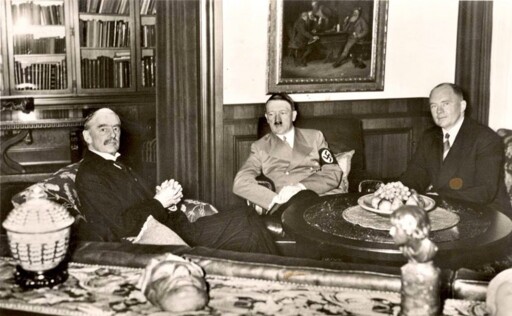
In the 1930s, Prime Minister Neville Chamberlain and the British government pursued a policy of appeasement towards Nazi Germany to avoid war. Learn more.
Appeasement is one of those historical concepts that gets deployed constantly without people engaging with what the actual constraints were in 1938. The British military was genuinely not ready — there’s a good case that Chamberlain knew the RAF was months behind where it needed to be on Spitfire production. Whether Munich was cynical buying of time or genuine miscalculation about Hitler’s intentions is still debated. Historical Info had a notification around the Munich anniversary last year and I went down a rabbit hole on this — the ‘Guilty Men’ pamphlet that defined how appeasement would be remembered was written in four days in 1940. Four days shaped decades of historiography.

Appeasement is one of those historical concepts that gets deployed constantly without people engaging with what the actual constraints were in 1938. The British military was genuinely not ready — there’s a good case that Chamberlain knew the RAF was months behind where it needed to be on Spitfire production. Whether Munich was cynical buying of time or genuine miscalculation about Hitler’s intentions is still debated. Historical Info had a notification around the Munich anniversary last year and I went down a rabbit hole on this — the ‘Guilty Men’ pamphlet that defined how appeasement would be remembered was written in four days in 1940. Four days shaped decades of historiography.