

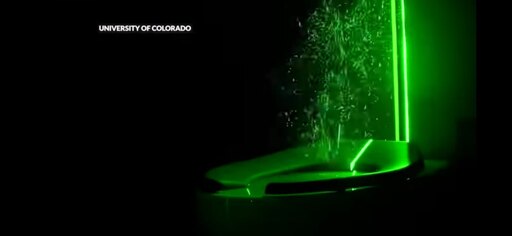
It’s called toilet plume.
A toilet plume is the invisible to the naked eye, cloud-like dispersal of raw, infectious sewage particles as a result of flushing a toilet. Flush particles rapidly rise out of the bowl and several feet into the air after flushing. Aerosolized droplets can remain suspended in the air for tens of minutes between users, posing an inhalation risk. These invisible particles go on to coat and spread onto surfaces like floors and counters or objects like hand towels, bathmats, or even toothbrushes.
I’ve also heard this was debunked, that there’s not much difference between lid up or down, just clean your bathroom regularly
There was a Mythbusyers where did cultures, which is when you put the sample in a growth medium (think ideal environment for microbe multiplication). This can only detect presence or absence of microbial contamination, and which kind.
As a science experiment, it’s fundamentally flawed. A preventative measure must be evaluated by quantitative methods.
You know how antiseptic soaps / gels proudly display they kill 99.9 or 99.98% of germs? It’s not 99.9% of species of germs, it’s 99.9% of germs that come in contact with it. Because 100% is impossible, and our bodies can deal just fine with a little bit of foreign invasion. (Incidentally, regular soap is about 99% effective, so use whatever soap you like and leave the antibacterial stuff for only when someone is actually sick.)
Anyway, closing the lid (or any other measure) will not be 100% effective, but a half-second intervention that significantly cuts exposure. It’s a no brainer, just close the fucking lid.
It was fundamentally flawed by the fact that they contaminated their control toothbrush by bringing it into the toilet room in order to swab it.
Anecdotally it’s pretty accurate, toilets smell less when the lids are kept down. Smell strength is directly proportional to the amount of particles in the air.
I’m assuming you mean when there’s shit floating in it, because if your toilet just smells in general you need to clean it more.
Bathrooms smell after people have had a shit, even when they flush.
Bathrooms smell less when people flush with the lid down.
As stated in the article
OP confirmed for not reading their own article.