

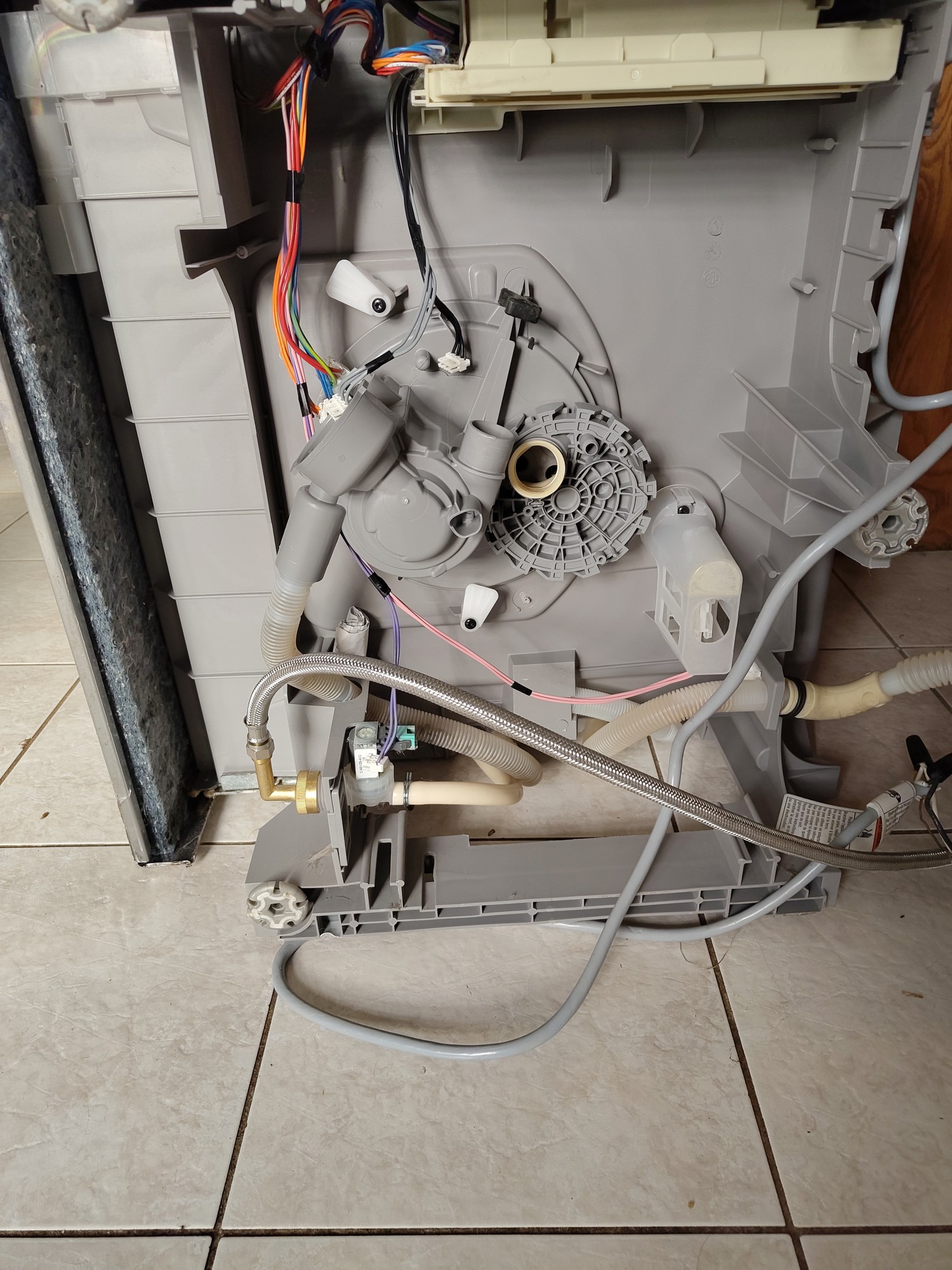
Part of trying the get my dishwasher to drain https://piefed.ca/c/diy@slrpnk.net/p/894317/help-fixing-my-dishwasher-it-won-t-drain-and-is-stop-on-sanitize-mode
I have removed to drain pump, solenoid, water heater.
The drain pump white part spins with no obstruction at all.
With a multimeter:
My solenoid is about to get 984 OHMs resistance.
I’m not sure how to check my drain pump. I don’t see any connector end. Closest thing are these 6 metal spike thing pointed out on the motherboard.
I don’t see any visible blockage.
I’m not sure if I need to check the voltage as well. And I’m not sure if i need the dishwasher running with water to test. Problem is still stuff is located at the bottom of the dishwasher. If I wanted to check the voltage with running water.
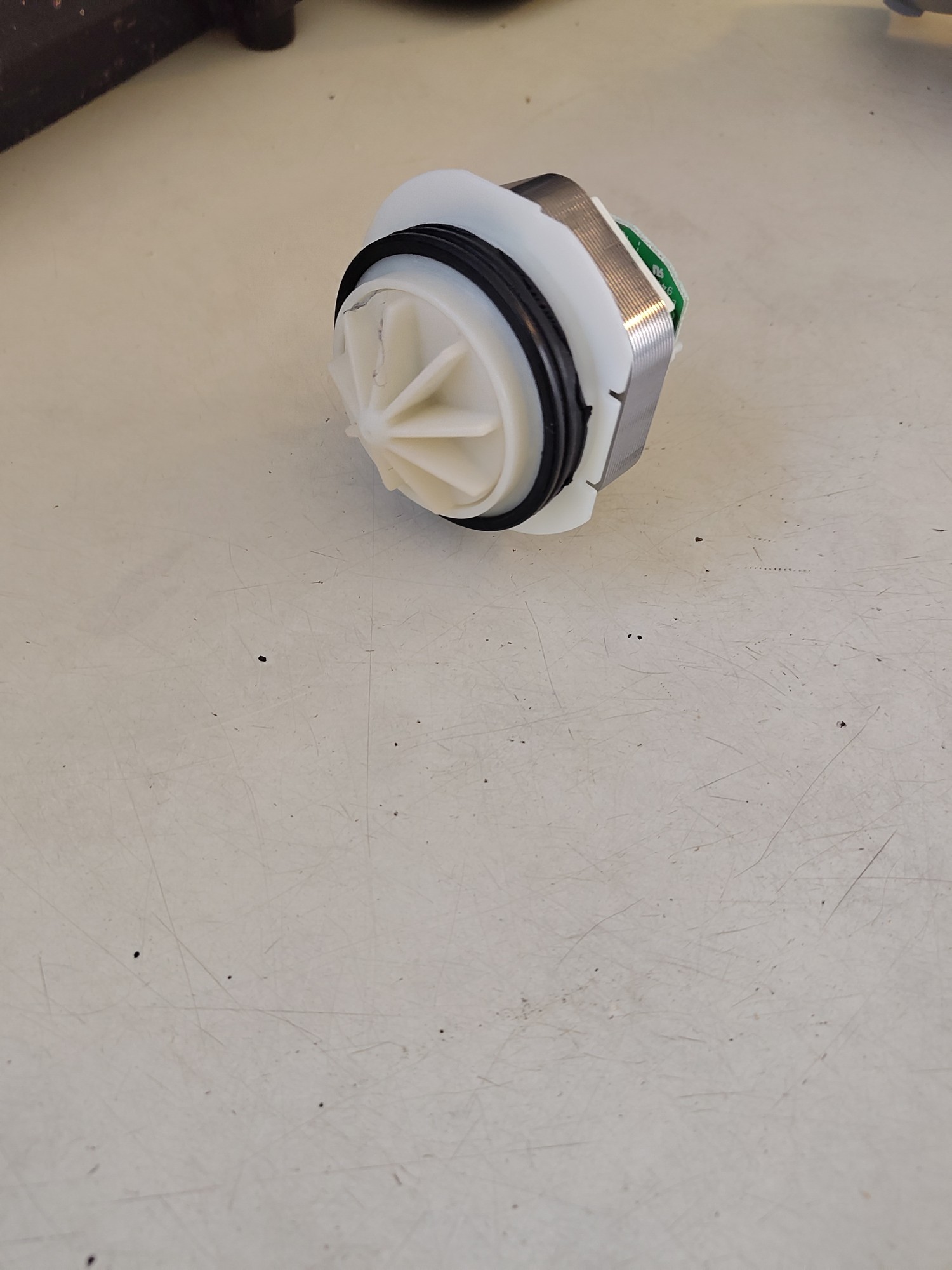
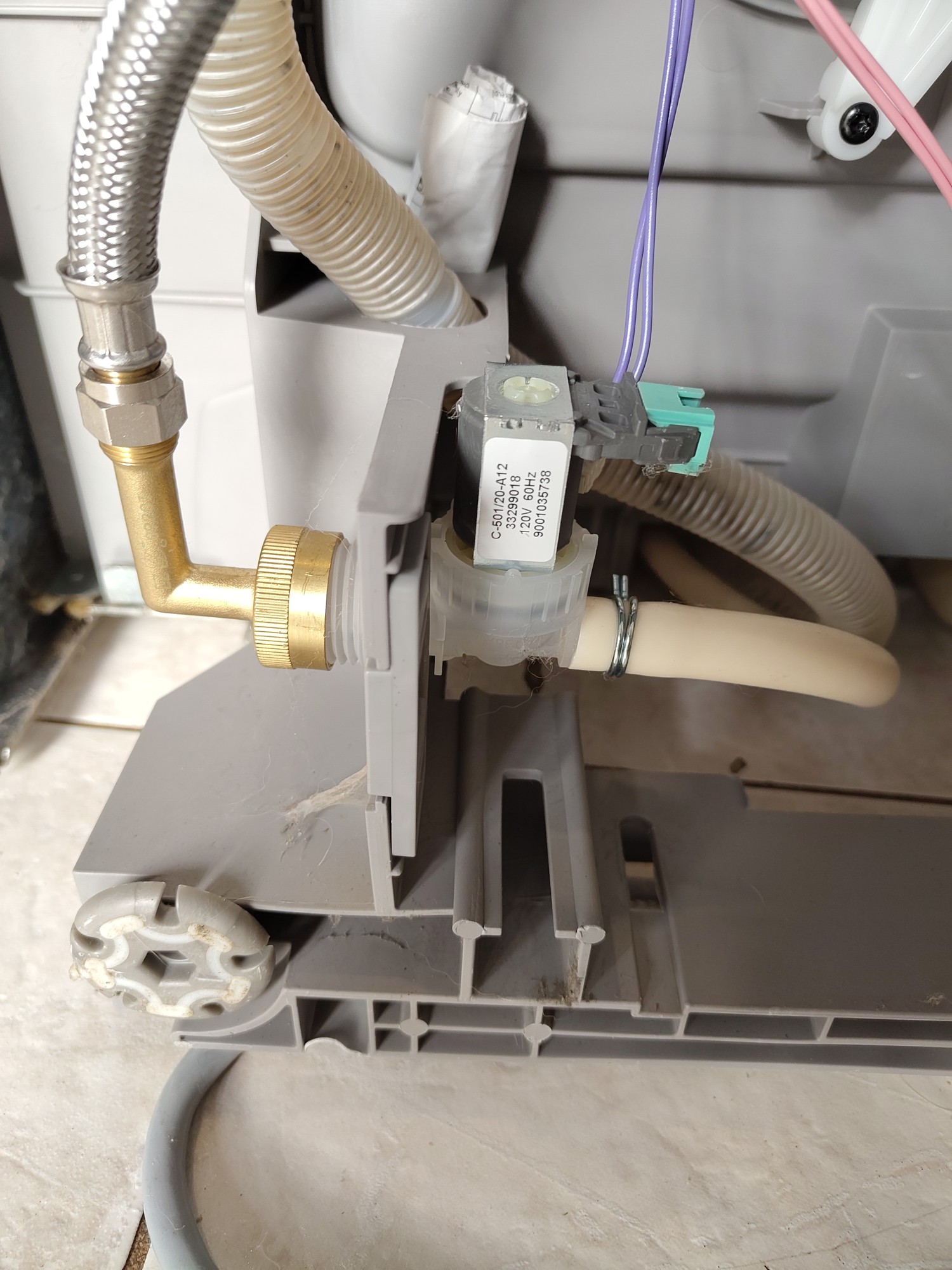
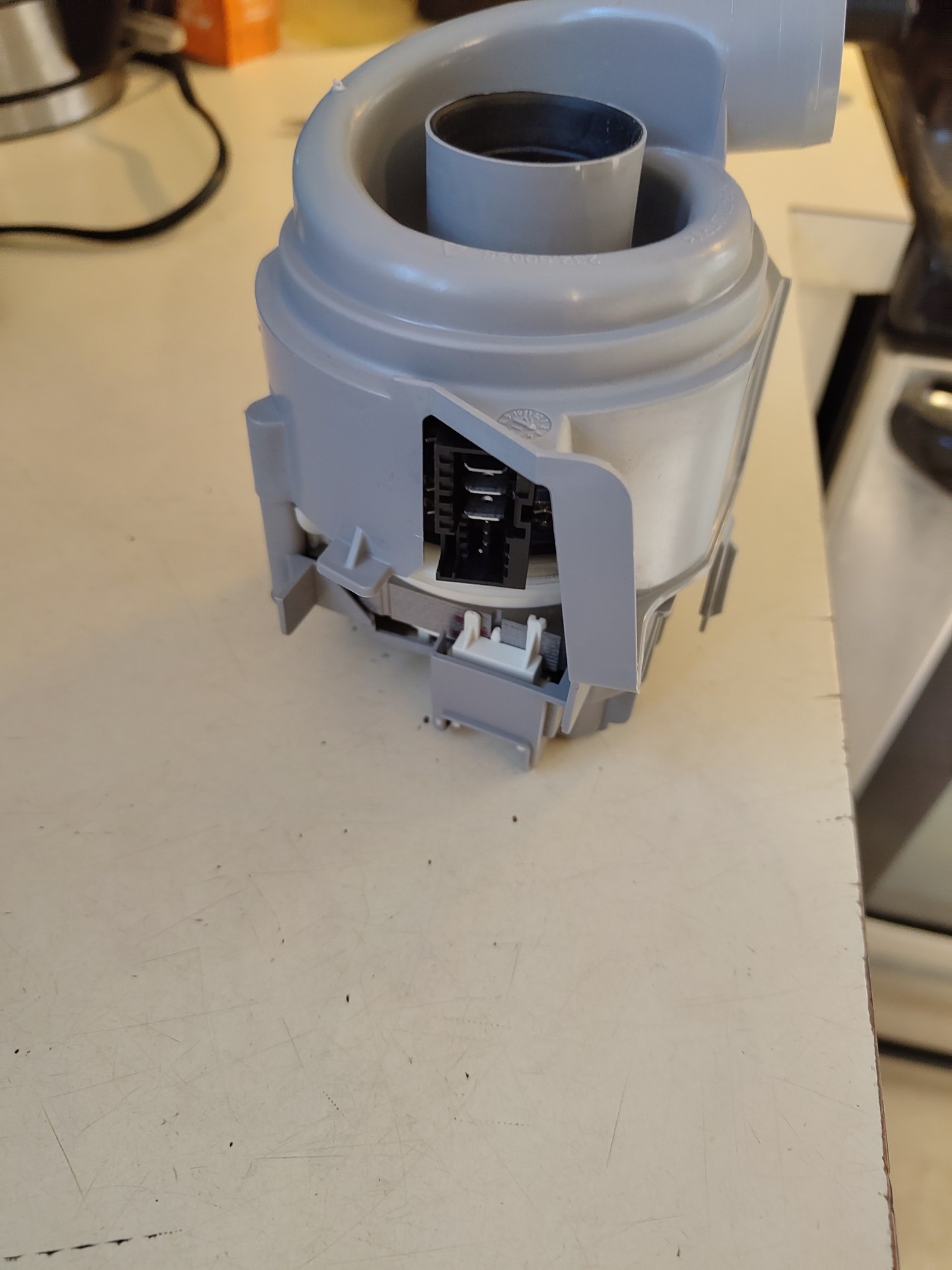
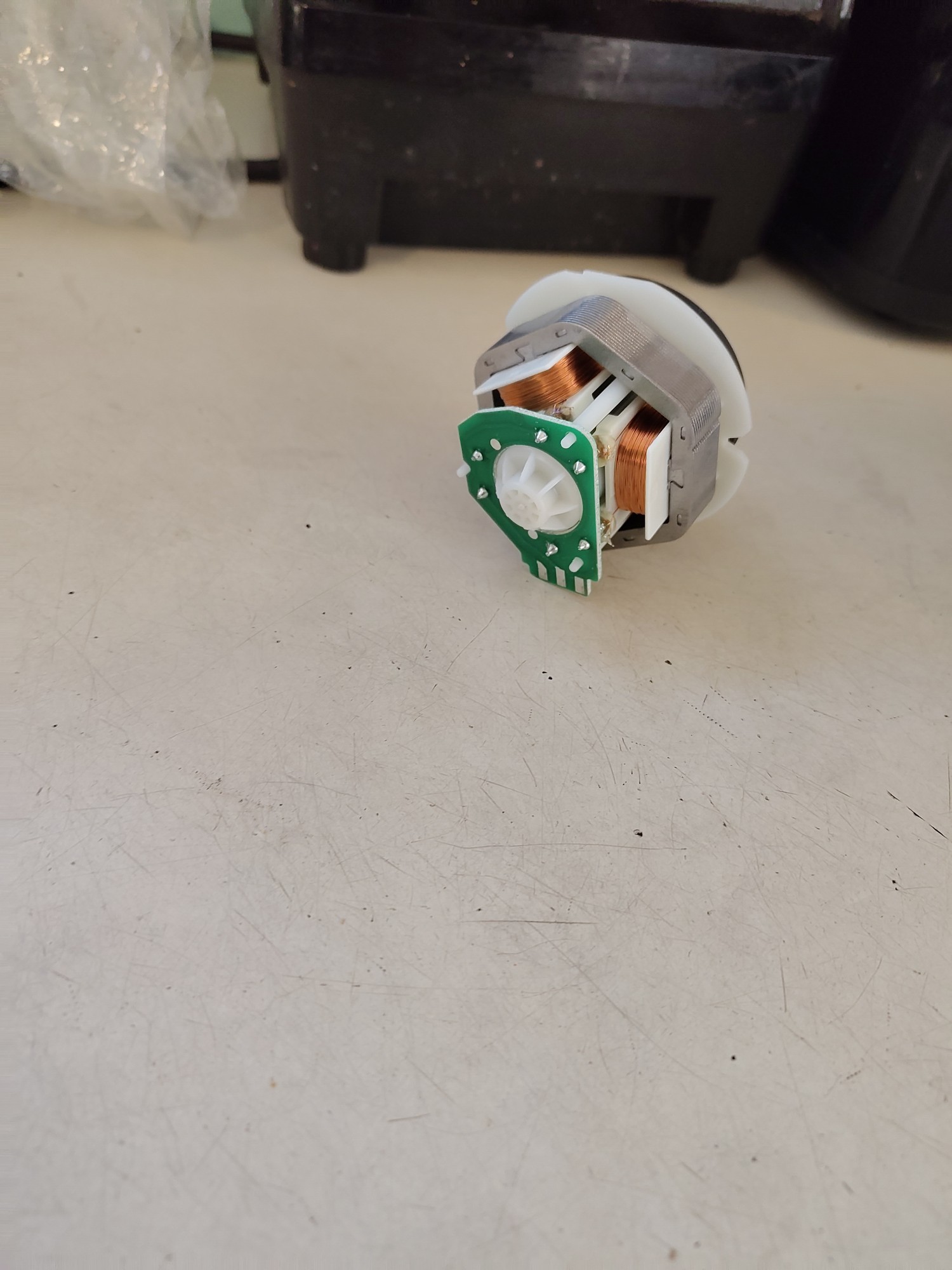
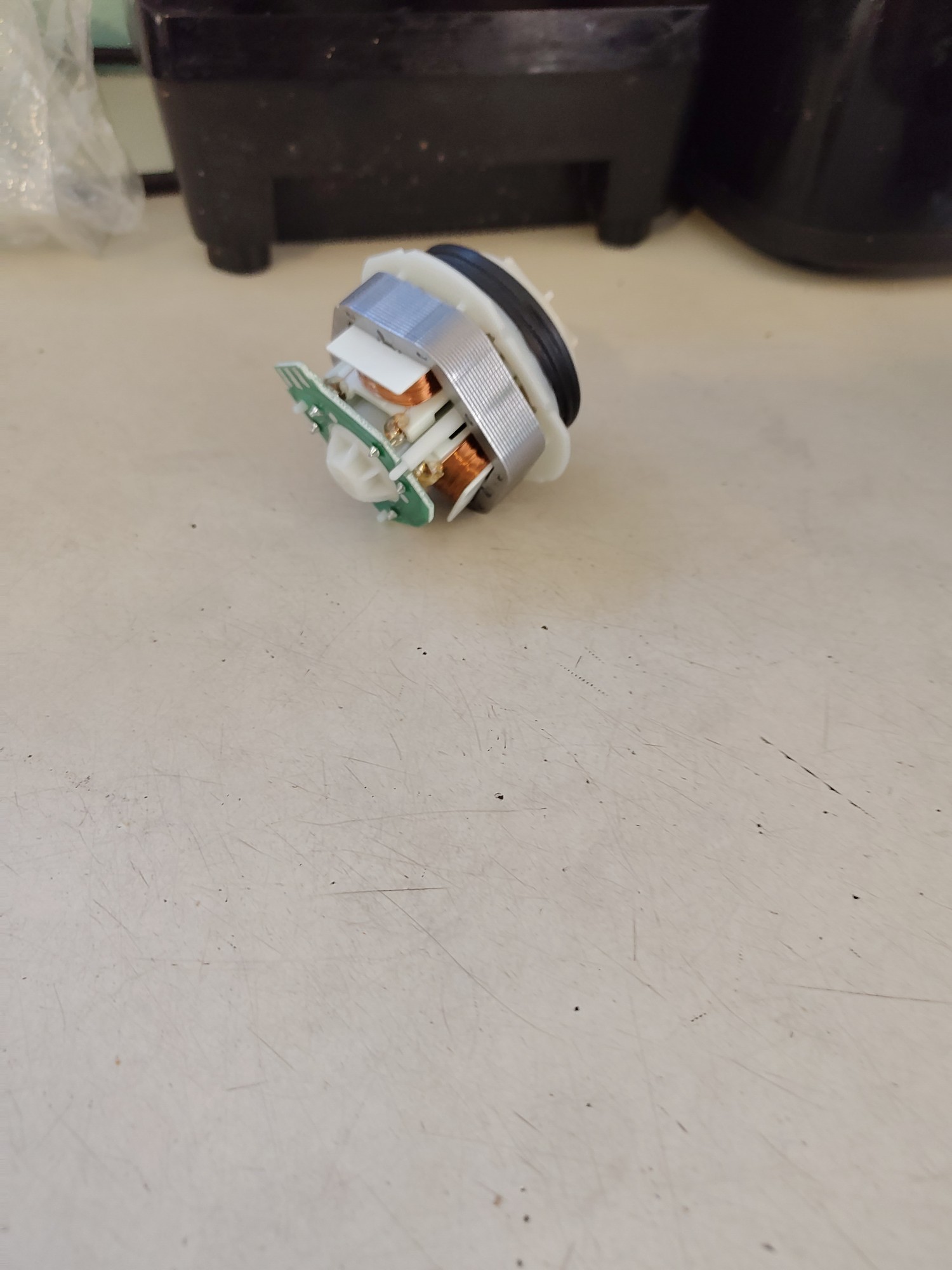
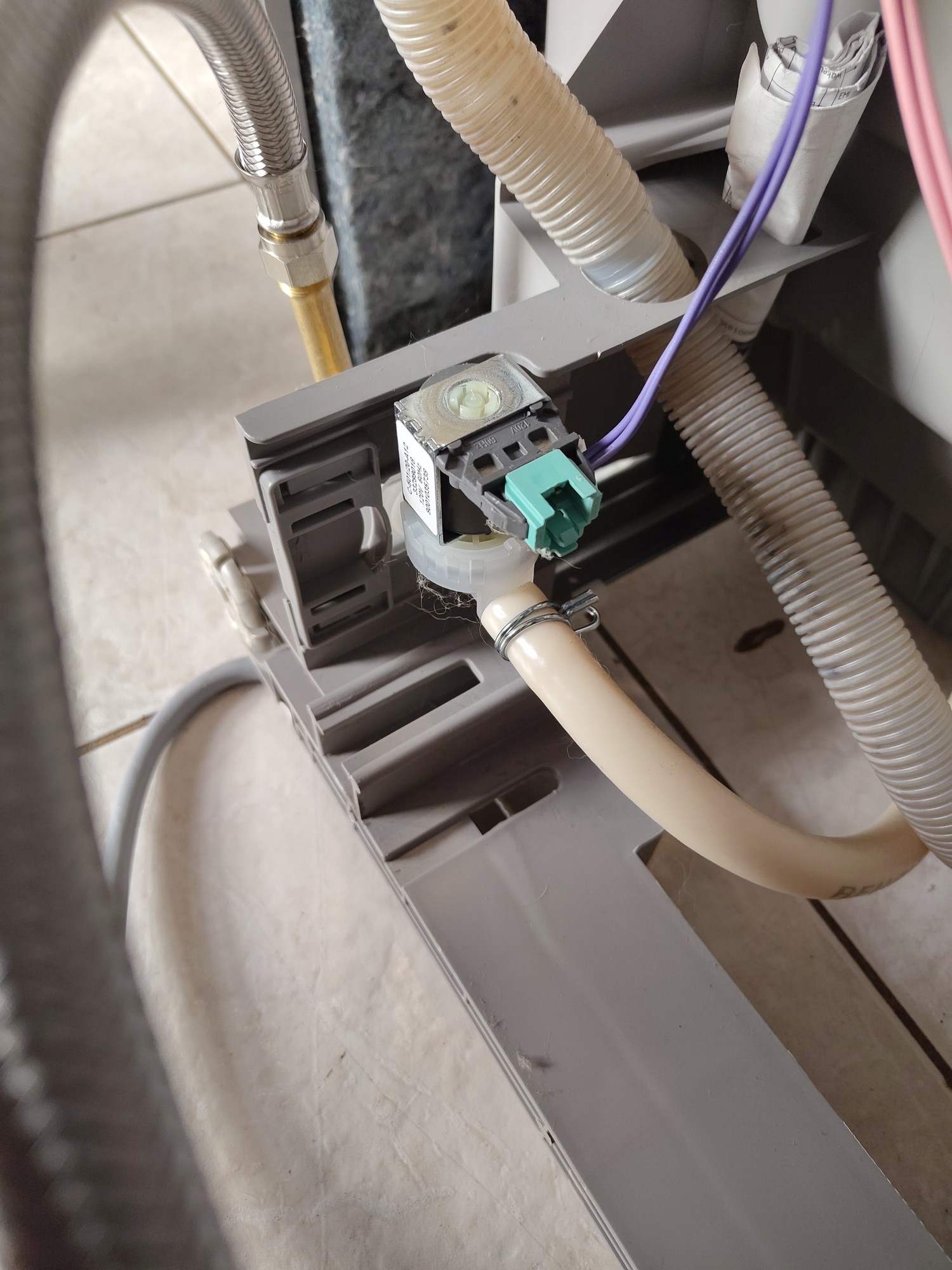
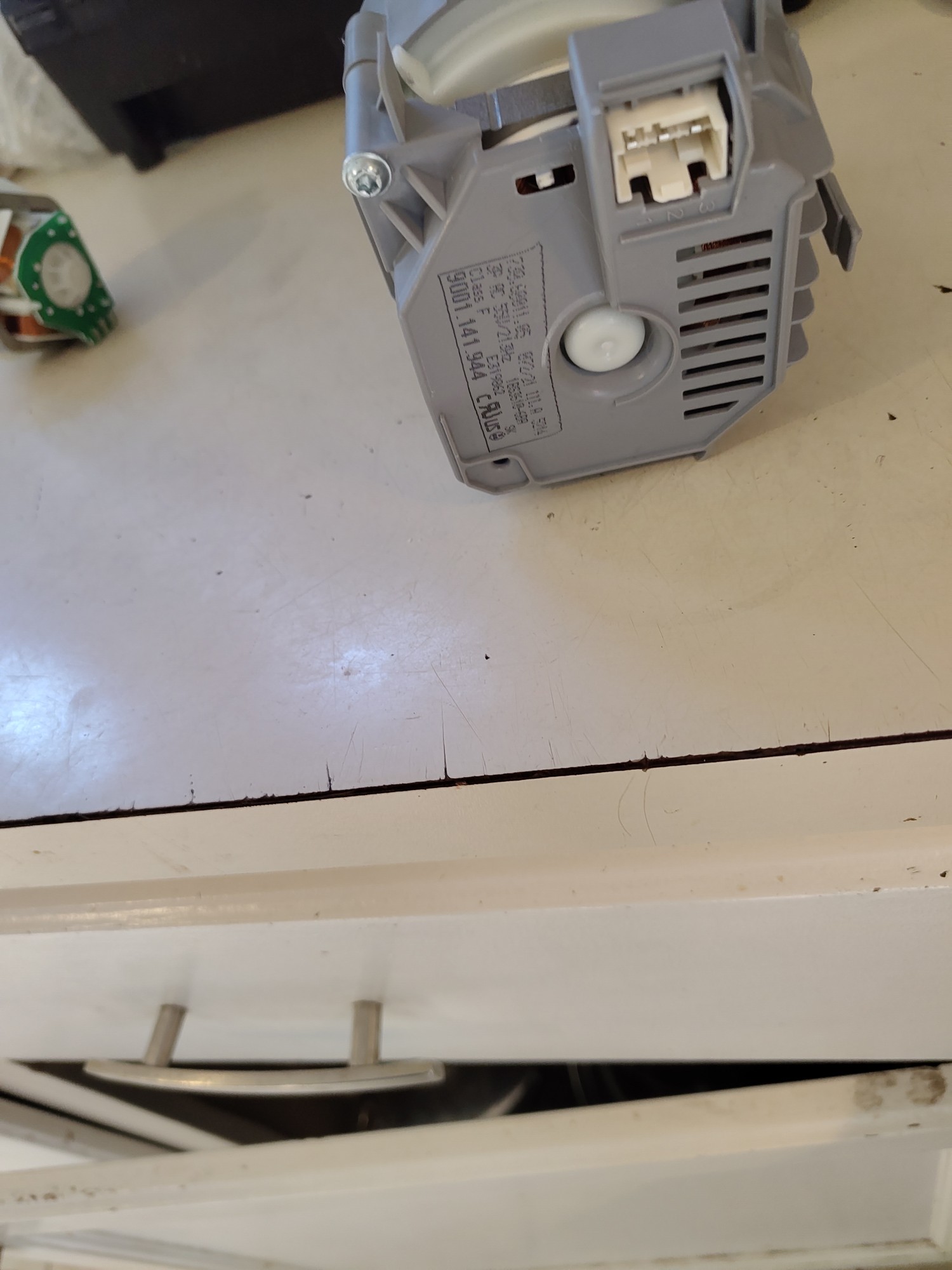
As I suspected this has your resistance measurements for each of the motors, so measure where indicated (power disconected) and you can see if the windings in the motor is faulty. Your selonoid value looks good.
So you’re saying this part could be broken? Is this the drain pump?
Could it helps this part instead? What is this part called? Also a drain pump?
The top picture is the drain pump motor that would be the part that might need replacing if you are having a drain pump error code. Before replacing it though I would check the windings (coils) to see it they are shorted ( 0 ohms) or burned (very high or infanate ohms). If it within range it might just be that it was not seated properly in the sump housing. The sump housing I’d the gray thing in the 2nd picture.
I’m not sure where to apply my multimeter to test the coils
Closest thing I can find in this end sticking end which connects to the electronics.
Edit: Testing to the right metal parts of that connector gave me Ohms 128.8
Looks like there are 3 coils wired in a Y formation, so the silver rectangles are where the electrical contact is made, let’s call them 1,2, and 3. If you measure across any 2 points you should get the same ( or close) ohm reading. In this set up you are measuring across 2 of the coils so measuring 1 & 2 then 1 & 3 then 2 & 3 should all be simalar and should not read 0 or infinity.
1 & 2, 1 & 3 do not read
2 & 3 reads
Blown pump then if you can’t read anything on those pairs. They’re literally physical coils that should always pass current no matter what, and all of the smarts happens inside the control board for making the 215Hz @ 55V & 3A to feed it.
You have a dead coil you will have to replace the motor.
This fixed the issue. Dishwasher is working great now. Thank you so much!
Your welcome, glad its working for you again :)
Could this have to do with the water to filling up anymore since I took the dishwasher apart to identify the drainage issue?
It’s possible that the controller is identifying an open coil and not filling, you should get an error code right away if so. it’s also likely that you did not get a connector seated correctly when re-assembling or that the float switch is stuck from having it tippled over. Check all the connections and after setting it back up right, check that that the float switch can move up and down freely.