PETA exists to kite misplaced public vitriol and industrial counter-propaganda away from the constellation of smaller animal advocacy groups who make the majority of forward progress on their shared mission. Some local vegan advocacy group with 30 members can do an outsized amount of good in their community but isn’t going to survive a corporate laser targeting, however PETA can shrug off an attack like that without issue. PETA is basically the main tank of a raid group, smaller orgs are the DPS, and industrial animal agriculture (Or from my social ecology perspective, our tendency to dominate the natural world in general) is the raid boss. PETA very much wants the vitriol and isn’t at all the out of touch misguided organization that they willing and strategically wear as a reputation.
To the contrary! A bumbling oafishness that sometimes makes the team look bad to outsiders is a core tank trope and a common recipe for initiating encounters. And Taunt is a cornerstone of the tank kit.
Seriously though, PETA doesn’t make other vegan activists look any worse than animal ag propaganda already does. A lot of money goes into making vegans look bad.
No ad hominem please, I presume we’re all adults here. I understand why PETAs strategies may seem counter-intuitive from the outside, but they’re a large organization that has been finding success in their mission for decades.
I know plenty of people who didn’t go vegetarian or vegan especially because peta made that choice look obnoxious and they didn’t want to associate with it
It’s not really that complicated a strategy for a large, well-financed team of full time activists to produce, and really it’s within a genre of “leveraging propagandized outrage” shock activism seen more frequently in the past decade from larger advocacy groups. Like those incidents of people vandalizing art with soup, or pouring products on the ground in grocery stores, or painting monuments. It generates outrage, that outrage garauntees wide news coverage, that wide news coverage reaches and activates 100x or 1000x the number of fresh new activists that traditional advocacy acts might, making the media-directed vitreol of millions who will forget and move on within a week fantastically worthwhile. It basically taps into the power of existing propaganda against a movement, using it to ultimately drive interest in the movement. I forget where I was reading an interview with a Greenpeace leader, about how they simply couldn’t pass on these tactics because of how effective they are, and they arrived at that conclusion not by prediction but by experience.
From what I gathered reading the interview mentioned (I’ll see if I can find it) it was the statistical results they couldn’t argue with. There was just as much skepticism and resistance to these tactics internally, until the results couldn’t be ignored. Activists are generally concerned about likability and are not analagous to nihilistic billionaire narcissists.
Results indicated that PETA’s attack message against abuses at corporate pig farms was effective in eroding the credibility of the corporate food-industry raising animals for consumption. At the same time, PETA’s credibility rose overall after participants viewed the PETA attack message.
That seems to align with your argument but not with the topic. The study was focused on corporate pig farm.
The 53 participants were volunteers participating for course credit from upper division communication courses at a large public university located in an area where agribusiness interests loom large.
This is a terrible sample to base any conclusions on.
The results only give clear indication that such advocacy messages intensify already existing negative predispositions
And this indicates it is not a generally useful approach.
The study doesn’t measure how long the effect lasts; outrage is fleeting.


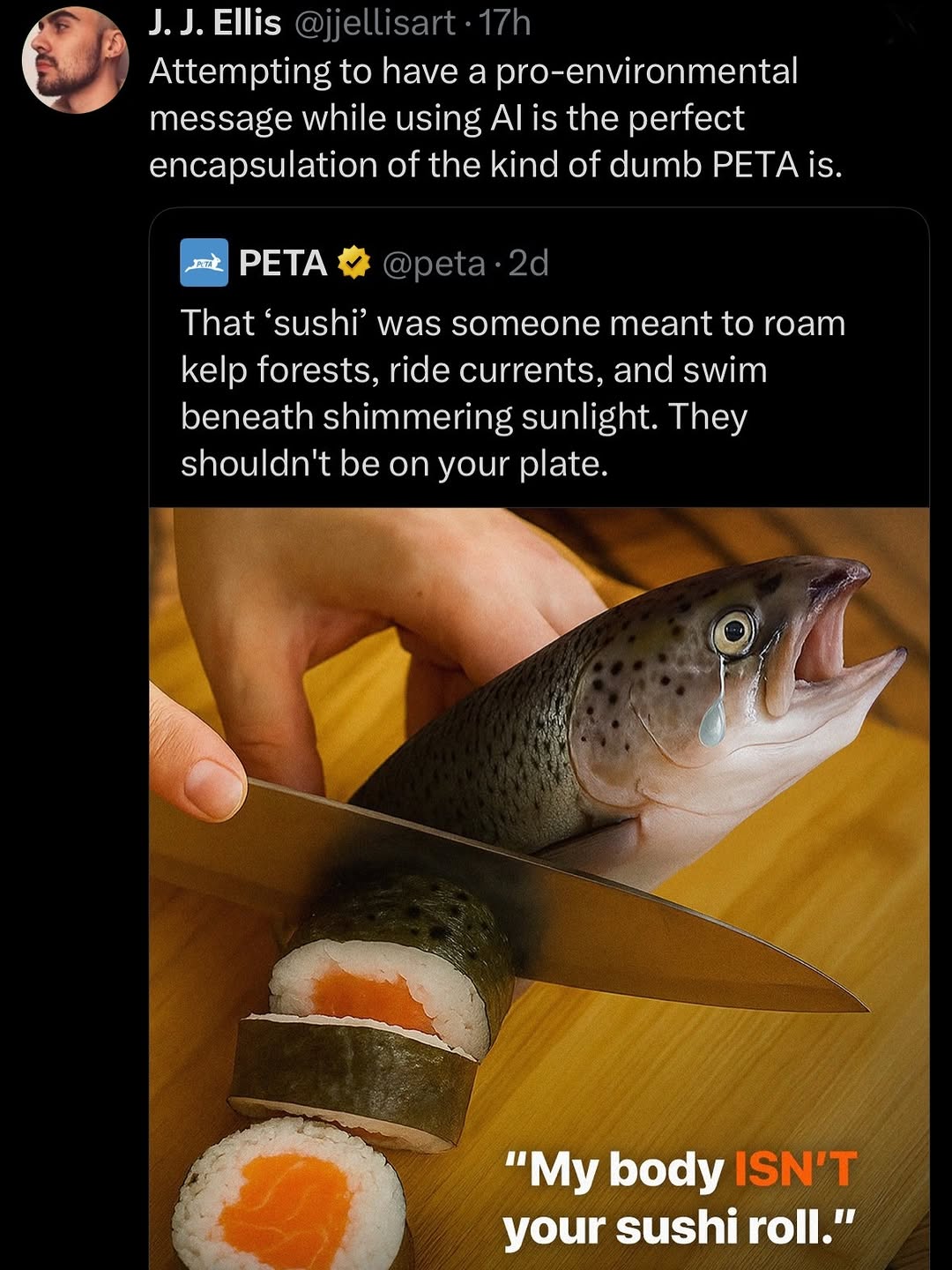
PETA exists to kite misplaced public vitriol and industrial counter-propaganda away from the constellation of smaller animal advocacy groups who make the majority of forward progress on their shared mission. Some local vegan advocacy group with 30 members can do an outsized amount of good in their community but isn’t going to survive a corporate laser targeting, however PETA can shrug off an attack like that without issue. PETA is basically the main tank of a raid group, smaller orgs are the DPS, and industrial animal agriculture (Or from my social ecology perspective, our tendency to dominate the natural world in general) is the raid boss. PETA very much wants the vitriol and isn’t at all the out of touch misguided organization that they willing and strategically wear as a reputation.
Except tanks don’t go around making adventurers look bad.
To the contrary! A bumbling oafishness that sometimes makes the team look bad to outsiders is a core tank trope and a common recipe for initiating encounters. And Taunt is a cornerstone of the tank kit.
Seriously though, PETA doesn’t make other vegan activists look any worse than animal ag propaganda already does. A lot of money goes into making vegans look bad.
Yea a lot of money goes in to making activists look bad … which is exactly why it’s absolutely moronic of PETA to contribute actively to the problem.
Especially when they’re adding credibility to the slander.
And yet, it’s a strategy that has worked for decades.
Removed by mod
No ad hominem please, I presume we’re all adults here. I understand why PETAs strategies may seem counter-intuitive from the outside, but they’re a large organization that has been finding success in their mission for decades.
I know plenty of people who didn’t go vegetarian or vegan especially because peta made that choice look obnoxious and they didn’t want to associate with it
Peta is doing more harm than good
How many people? Tell me all the details about each of them.
This has serious 4d chess vibes to it.
It’s not really that complicated a strategy for a large, well-financed team of full time activists to produce, and really it’s within a genre of “leveraging propagandized outrage” shock activism seen more frequently in the past decade from larger advocacy groups. Like those incidents of people vandalizing art with soup, or pouring products on the ground in grocery stores, or painting monuments. It generates outrage, that outrage garauntees wide news coverage, that wide news coverage reaches and activates 100x or 1000x the number of fresh new activists that traditional advocacy acts might, making the media-directed vitreol of millions who will forget and move on within a week fantastically worthwhile. It basically taps into the power of existing propaganda against a movement, using it to ultimately drive interest in the movement. I forget where I was reading an interview with a Greenpeace leader, about how they simply couldn’t pass on these tactics because of how effective they are, and they arrived at that conclusion not by prediction but by experience.
Sure. Anyone who is aligned with the mission will perceive this as an expert move. Similarly, Trump or Musk supporters do the same. Hence, 4D chess.
From what I gathered reading the interview mentioned (I’ll see if I can find it) it was the statistical results they couldn’t argue with. There was just as much skepticism and resistance to these tactics internally, until the results couldn’t be ignored. Activists are generally concerned about likability and are not analagous to nihilistic billionaire narcissists.
edit - This article by a disruptive politics researcher isn’t the interview I’m looking for but it illustrates my ideas here better than I have.
Are you referring to The credibility of shock advocacy: Animal rights attack messages
That seems to align with your argument but not with the topic. The study was focused on corporate pig farm.
This is a terrible sample to base any conclusions on.
And this indicates it is not a generally useful approach.
The study doesn’t measure how long the effect lasts; outrage is fleeting.
No, but I edited my previous comment to link to an article that’s close to what I’ve been trying to explain.