You must log in or register to comment.
I don’t know about the bobbing, but I’ve been hanging onto this infographic all year:

A summary, for those who’d rather text:
- Three main things are extracted out of the tea leaves, caffeine, catechin, and tannins. Catechins are generally the nice flavours, tannins are the bitterness.
- Caffeine extracts fast. Most of it is in the tea within 1 minute.
- Catechins extract slower, 5 minutes to get the peak.
- Tannins extract slowest.
- Sweet spot where you get the most catechins without too many tannins is about 3–5 minutes.
Where I found it came with this lengthy description:
A cup of tea brewed for 1 minute and a cup brewed for 5 minutes are not the same beverage. The dry leaf is identical. The water is identical. The amount of caffeine, catechins, and tannins extracted into your cup is dramatically different.
Astill and colleagues (2001, Journal of Agricultural and Food Chemistry) ran a comprehensive study at Unilever Research, mapping how each compound class extracts from black and green tea leaves over time. The kinetics they documented are consistent with established tea extraction chemistry.
Caffeine extracts fast. Most of the caffeine in the leaf is in your cup within the first 1-2 minutes of steeping. By 3 minutes, caffeine extraction is essentially complete and additional brew time adds little.
Catechins extract slower. EGCG, EGC, ECG, and EC, the polyphenols that drive most of the health-related research on green tea, are larger molecules with more complex extraction kinetics. They continue extracting meaningfully through 3-5 minutes. A 1-minute brew captures only a fraction of the catechin content the same leaf could deliver.
Tannins extract last. The high-molecular-weight polymeric polyphenols that produce astringency and harsh bitterness become prominent later in the brew. After roughly 4-5 minutes of steeping, the tannin fraction rises notably and the cup turns from bright to harsh.
A separate effect that applies regardless of brew time: tea polyphenols as a class bind non-heme iron. Hurrell and colleagues (1999, British Journal of Nutrition) reported that drinking tea with a meal reduced non-heme iron absorption by approximately 60 percent in healthy subjects. This effect is not specific to over-steeped tea. Even normally brewed tea consumed with iron-containing food has the same effect, because all the major tea polyphenols (catechins included) participate in iron binding.
What this means in practice. The tea bag dipped for 30 seconds and pulled out is mostly a caffeine delivery vehicle with minimal catechin content. The tea steeped for 8 minutes is a tannin-heavy infusion that tastes harsh. The 3 to 5 minute window captures the catechin peak before the astringent tannin fraction builds substantially.
Two caveats worth noting. The exact extraction kinetics depend on water temperature, leaf grade, and whether the tea is loose-leaf or in a bag. Higher temperatures accelerate all extraction. Smaller particle sizes (commercial tea bag dust) extract faster than whole leaves. The 3 to 5 minute window applies to typical brewing conditions: roughly 95 degrees Celsius water, standard tea bag, one cup volume. Green tea is often brewed at lower temperatures (75-85 degrees Celsius) which slows catechin extraction and extends the optimal window. The Astill 2001 study was conducted at Unilever, the parent company of Lipton, which is relevant context. The underlying kinetics are not industry-disputed and align with established food chemistry.
A practical implication. If you are drinking tea for the catechin and EGCG content that drives most of its associated health research, the 30-second tea bag dunk delivers roughly the same caffeine as a longer brew but only a fraction of the catechins. If you are drinking tea purely for caffeine, a short brew is fine. If you have iron status concerns and consume tea with meals, the binding effect happens regardless of brew time. Drinking tea between meals rather than with them is the relevant lever for iron absorption, not brew time.
Same leaf. Same water. Three minutes of difference changes the chemistry of what you are drinking.
Astill et al., Journal of Agricultural and Food Chemistry, 2001 Hurrell et al., British Journal of Nutrition, 1999
I used to go purely on vibes. Put the teabag in, pour over boiling water, dunk a few times. Probably about 30 seconds, maybe a minute, of steeping. Now I time out 3 minutes and leave it.
If anyone has Nebula, the Taiwan episode of Jason Slaughter’s new travel show Daypass has a great little aside that also touches on some of this stuff, in the context of whole leaf tea rather than teabags or the more common type of loose leaf chopped tea.
Someone on Lemmy a while back told me that teabags have micro plastics and the more I leave it in there the more I’m consuming.
So now I don’t know what to do.
They’re good microplastics to fight the bad microplastics
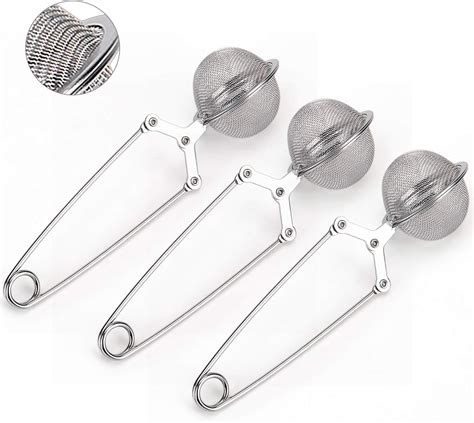
I recommend one of these, personally. Very easy to use and clean.
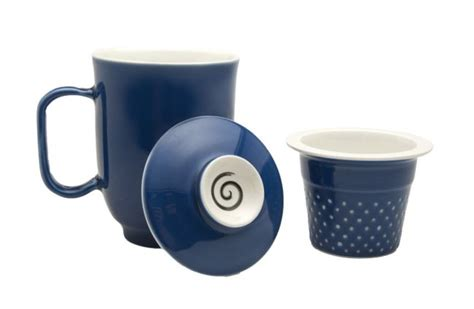
Or a steeping mug, also very easy to use and clean
Or if you go through a lot of tea, a steeping teapot is a nice choice as well.
Squeeze or no squeeze?
Also, for anyone who is a dunker: I shall not stand for this atrocity against tea and we shall be enemies.
Man am I a scrub. I intentionally oversteep. I’ve been known to have to microwave it back to temp because it sat for so long. Idk why, it just seems weak without every single tannin I can muster. I usually use cheap bags but still
It does. You ever pour water over a teabag and just leave it? Shit’s weak
I was gonna say, surely anyone who has actually done this would know the answer.
I, too, enjoy being an agitator
Sequel: Not sure flicking my fingers through the water under the tap helps it heat up faster, but it’s nice to feel like part of something.
Im glad im not the only one
It does. Dry tea is hydrophobic. You get the tea wet by repeated bobbing, at least if that is what you are referring to.
There’s probably also a very limited diffusion effect, so agitation may help
Just put it near the top. The water with soluables sinks down on its own, for the most part.
What does the tea have against gay folks?
Not enough repeated bobbing.